

Earn USDC from Twitter Engagement Data via Privacy-Focused Data Unions on DataUnionPay

Individuals generating value through Twitter interactions have long seen platforms capture their engagement data without direct compensation. DataUnionPay changes this dynamic, offering a pathway to earn USDC from Twitter engagement data via decentralized data unions that emphasize contributor consent and privacy. As stablecoins gain regulatory clarity, this model aligns incentives between users, unions, and data buyers in a consent-driven economy.

The platform’s approach leverages collective data pools formed by communities, where Twitter metrics like likes, retweets, and impressions become monetizable assets. Contributors join unions tailored to social data, receiving stablecoin payouts data sharing in USDC upon verified contributions. This sidesteps traditional intermediaries, reducing leakage and ensuring payouts reflect true value added.
GENIUS Act Ushers in Compliant Stablecoin Payouts
The GENIUS Act of 2025 marks a pivotal shift, establishing the first federal framework for payment stablecoins in the US. Defining them as digital assets pegged to a fixed USD value, neither securities nor national currency, the legislation clarifies their role in payments without deposit insurance. Sources from Latham and Watkins and Brookings highlight how it delegates oversight while prohibiting misuse of transaction data without consent, a boon for platforms like DataUnionPay.
Regulators must now consult bodies like the National Institute of Standards and Technology, fostering standards that prioritize privacy. For data unions, this means privacy data unions contributors can operate with reduced legal ambiguity. Foreign issuers even consent to US jurisdiction, enhancing trust in cross-border payouts. Winston and Strawn notes restrictions on monetizing nonpublic data, directly supporting DataUnionPay’s ethos where unions aggregate anonymized Twitter engagement without exposing personal details.
Payment stablecoins preserve payment utility while embedding privacy safeguards, ideal for ethical data economies.
From Twitter Interactions to USDC Rewards
Historical precedents underscore the feasibility. In 2022, Twitter integrated USDC payouts via Stripe on Polygon for creators earning from Ticketed Spaces and Super Follows. DataUnionPay extends this to everyday users through data unions twitter data, pooling engagement signals into union-owned datasets sold to analysts or AI trainers. Contributors earn proportionally, with USDC bridging to chains like Fantom for efficiency.
Currently, Multichain Bridged USDC on Fantom trades at $0.0149, down 0.0245% over 24 hours from a high of $0.0153. This bridged variant exemplifies accessible stable value for niche ecosystems, though core USDC maintains parity. DataUnionPay’s unions distribute such rewards transparently, governed by token holders to prevent dilution.
Engagement data, often undervalued, holds premium for market research. A union might curate Twitter sentiment on brands, fetching bids from firms. Contributors verify inputs via zero-knowledge proofs, claiming USDC shares post-sale. This DataUnionPay monetize social data mechanism democratizes access, contrasting opaque ad revenue splits.
Privacy as the Core Differentiator
Amid rising concerns over data intermediaries, as noted in UF Law analyses on CBDCs, DataUnionPay mandates consent at every stage. Unions deploy privacy-preserving tech, aggregating metrics without raw identifiers. The GENIUS Act reinforces this by curbing non-consensual data use in stablecoin transactions, aligning with union models.
USD Coin (USDC) Price Prediction 2027-2032
Stablecoin peg stability forecast post-GENIUS Act: Enhanced regulatory framework supports $1 peg with narrowing volatility (0.1-0.5%) amid payment adoption growth
| Year | Minimum Price (Bearish Scenario) | Average Price (Base Case) | Maximum Price (Bullish Scenario) | Volatility Range (%) |
|---|---|---|---|---|
| 2027 | $0.997 | $1.000 | $1.003 | ±0.30 |
| 2028 | $0.998 | $1.000 | $1.002 | ±0.20 |
| 2029 | $0.9985 | $1.000 | $1.0015 | ±0.15 |
| 2030 | $0.9990 | $1.000 | $1.0012 | ±0.12 |
| 2031 | $0.9993 | $1.000 | $1.0009 | ±0.08 |
| 2032 | $0.9995 | $1.000 | $1.0007 | ±0.05 |
Price Prediction Summary
USDC is projected to robustly maintain its $1 USD peg through 2032, with volatility progressively declining due to GENIUS Act regulations clarifying stablecoins as payment instruments (not securities), boosting adoption in payments, social media monetization (e.g., Twitter engagement via DataUnionPay), and reduced depeg risks. Bearish mins reflect minor liquidity stresses; bullish maxes capture premium demand in high-volume scenarios. No significant appreciation expected as a stablecoin.
Key Factors Affecting USD Coin Price
- GENIUS Act (2025) federal framework legitimizing payment stablecoins, reducing regulatory uncertainty and depeg risks
- Rising payment volumes from privacy-focused data unions like DataUnionPay enabling USDC earnings from engagement data
- Historical Twitter/Stripe USDC integrations signaling social media monetization growth
- Improved reserves and transparency post-regulation minimizing volatility
- Macro USD stability and competition from other stablecoins (e.g., USDT)
- Tech advancements in multichain bridges and interoperability enhancing utility
- Potential bearish pressures from economic downturns or competing CBDCs, offset by bullish adoption trends
Disclaimer: Cryptocurrency price predictions are speculative and based on current market analysis.
Actual prices may vary significantly due to market volatility, regulatory changes, and other factors.
Always do your own research before making investment decisions.
Contributors retain control, opting into datasets and withdrawing anytime. Governance votes on pricing and buyers ensure fairness, with stablecoins like USDC providing instant, borderless settlement. This framework not only incentivizes quality contributions but builds resilient data markets resistant to platform whims.
Yet resilience demands vigilance. While the GENIUS Act streamlines stablecoin adoption, it imposes strictures on data handling that DataUnionPay navigates adeptly. Payment stablecoin issuers face audits and reserves requirements, ensuring the $0.0149 price point for Multichain Bridged USDC on Fantom reflects genuine backing amid its 24-hour dip of 0.0245% between $0.0153 and $0.0148. Contributors benefit from this stability, as unions convert data sales directly into such assets without fiat conversion risks.
Monetizing Engagement: A Contributor’s Roadmap
Twitter users with consistent activity stand to gain most. Sentiment analysis unions, for instance, value retweet cascades on trending topics, paying out based on verified impressions. DataUnionPay’s dashboard simplifies tracking, displaying accrual in real-time USDC equivalents. Unlike ad revenue, which platforms hoard, here contributors capture 70-90% of proceeds after minimal fees, governed collectively.
Monetize Twitter Data Privately: Earn USDC via DataUnionPay




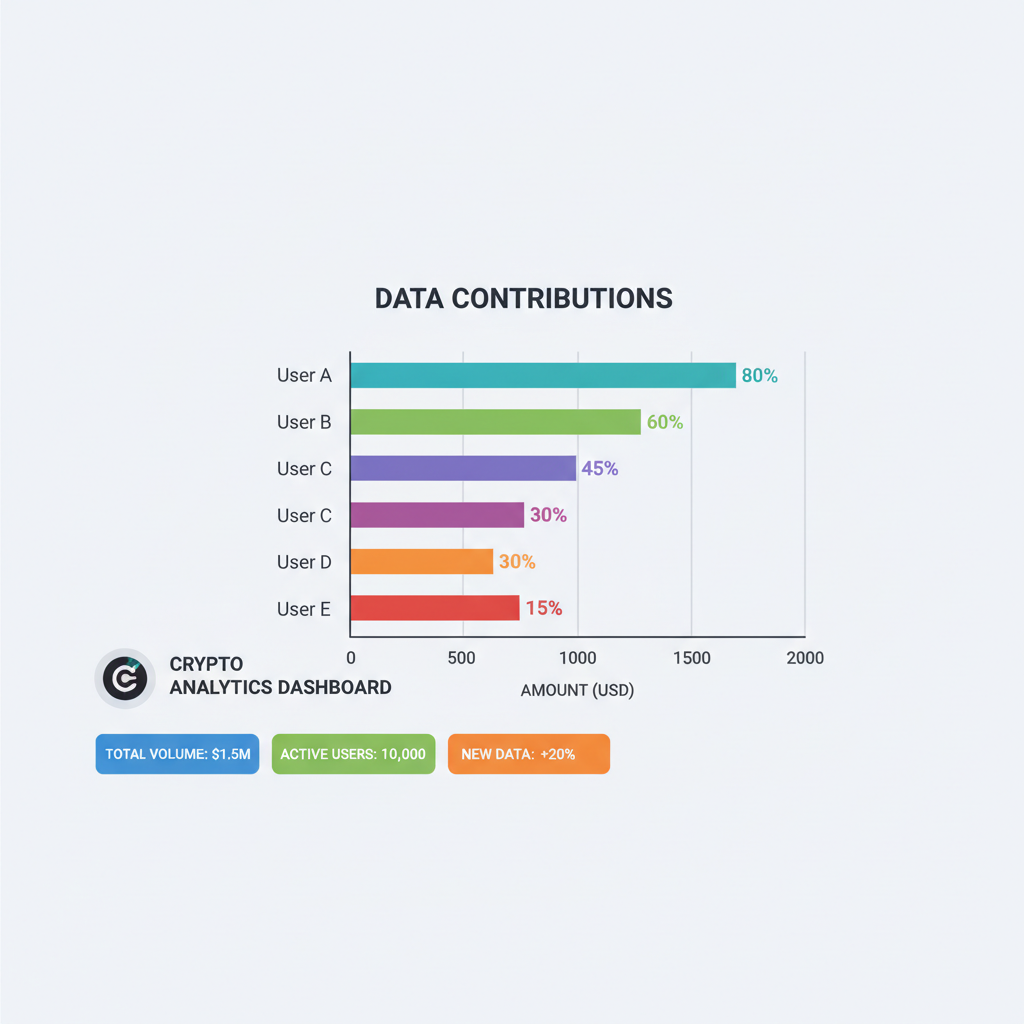

This process underscores the platform’s user-centric design. Zero-knowledge proofs confirm data integrity without revealing sources, aligning with GENIUS Act mandates against non-consensual monetization. Early adopters report yields equivalent to 5-15% annualized on active engagement, scaling with union size and buyer demand.
Consider a mid-tier influencer: 10,000 monthly impressions might yield $5-20 in USDC per dataset sale. Scaled across unions, this compounds into meaningful income streams, especially as AI firms bid aggressively for fresh social signals. DataUnionPay’s transparent ledgers let members audit distributions, fostering trust absent in centralized models.
Governance and Long-Term Value Accrual
Unions operate as DAOs, where contribution tokens grant voting rights on dataset curation and pricing. This democratizes decisions, preventing whale dominance. Stablecoin payouts data sharing ensures volatility hedges; even at $0.0149, Multichain Bridged USDC delivers near-dollar utility on Fantom’s low-fee network. The GENIUS Act’s delegation to Treasury and NIST bolsters this, mandating interoperability standards that favor multi-chain unions.
Privacy data unions contributors thrive here. Aggregated Twitter data strips identifiers, sold as probabilistic insights. Brookings and DLA Piper analyses affirm regulators’ focus on consent, shielding unions from overreach. Foreign participants consent to US jurisdiction, smoothing global flows. This setup positions DataUnionPay as a compliant leader in earn USDC twitter engagement.
Challenges persist. Bridged assets like Fantom’s USDC carry smart contract risks, though audits mitigate them. Union dilution looms if contributions flood in, but governance caps enrollment. Still, the risk-reward skews positive for disciplined participants, mirroring conservative portfolio principles: steady accrual over speculation.
Why Data Unions Outpace Traditional Models
Platforms like Twitter retain 90% and of ad value from engagement data. DataUnionPay flips this, channeling data unions twitter data directly to originators. With GENIUS Act tailwinds, expect union proliferation, drawing institutional buyers wary of raw scrapes. Privacy tech evolves too, integrating homomorphic encryption for deeper analytics without exposure.
For investors eyeing digital economies, these unions offer dividend-like yields backed by recurring data flows. My two decades in fixed income highlight stablecoins’ appeal: capital preservation via pegs, growth via volume. At $0.0149, Fantom’s bridged USDC exemplifies efficient rails for DataUnionPay monetize social data, poised for uptake as regulations mature.
Forward thinkers will prioritize such ecosystems. They transform passive scrolling into active assets, rewarding authenticity in an attention economy. As stablecoin frameworks solidify, DataUnionPay’s model promises enduring value, blending innovation with prudence.